

The Configurable Robotic Platform for Multi-Material Biofabrication
Go from concept to fabricated construct in a single session. Dual independent turrets, ten swappable tools, and a sealed GMP-ready chamber — so you spend less time configuring equipment and more time advancing your research.
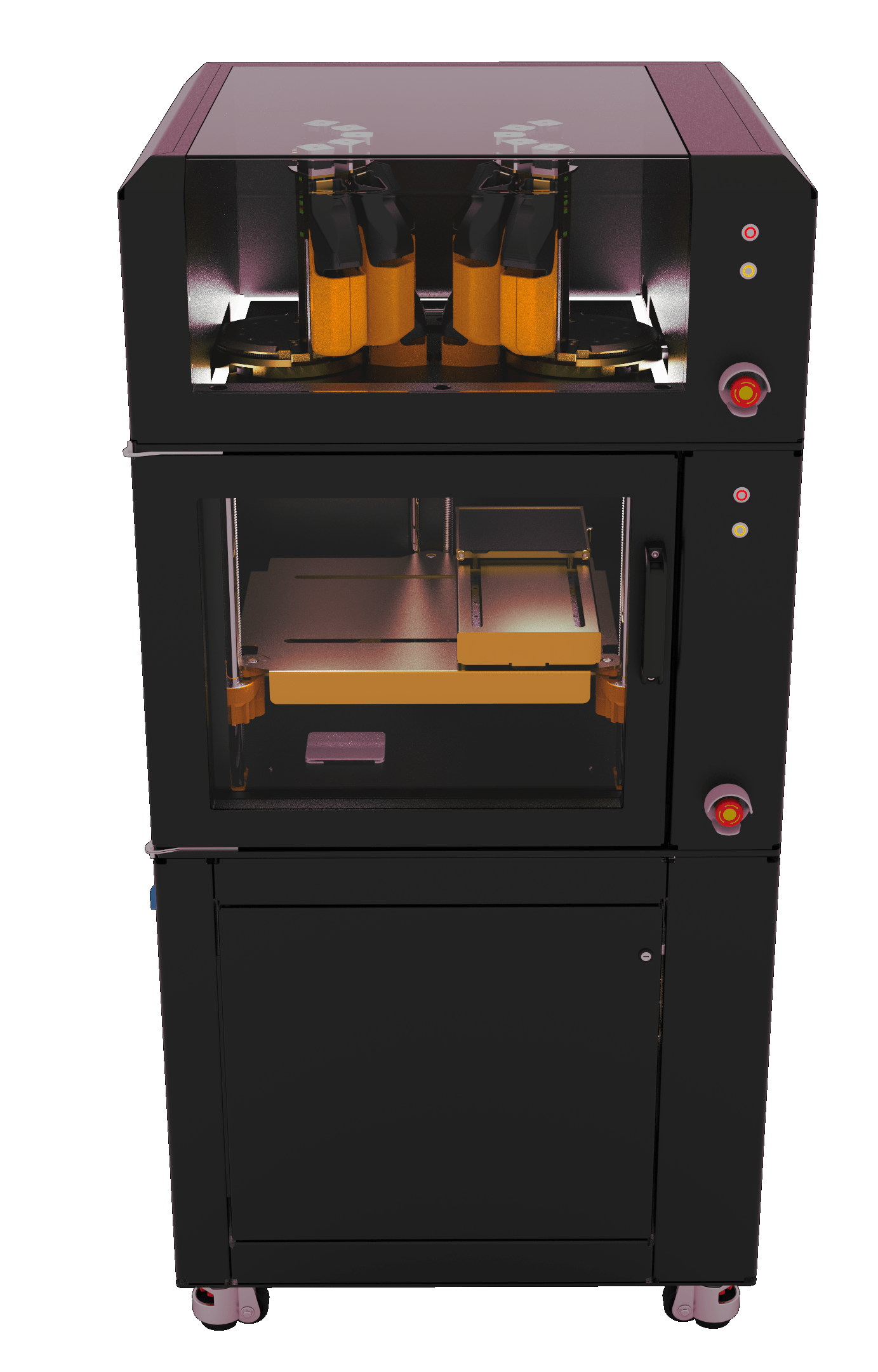
Dual turrets. Ten tools. No limits.
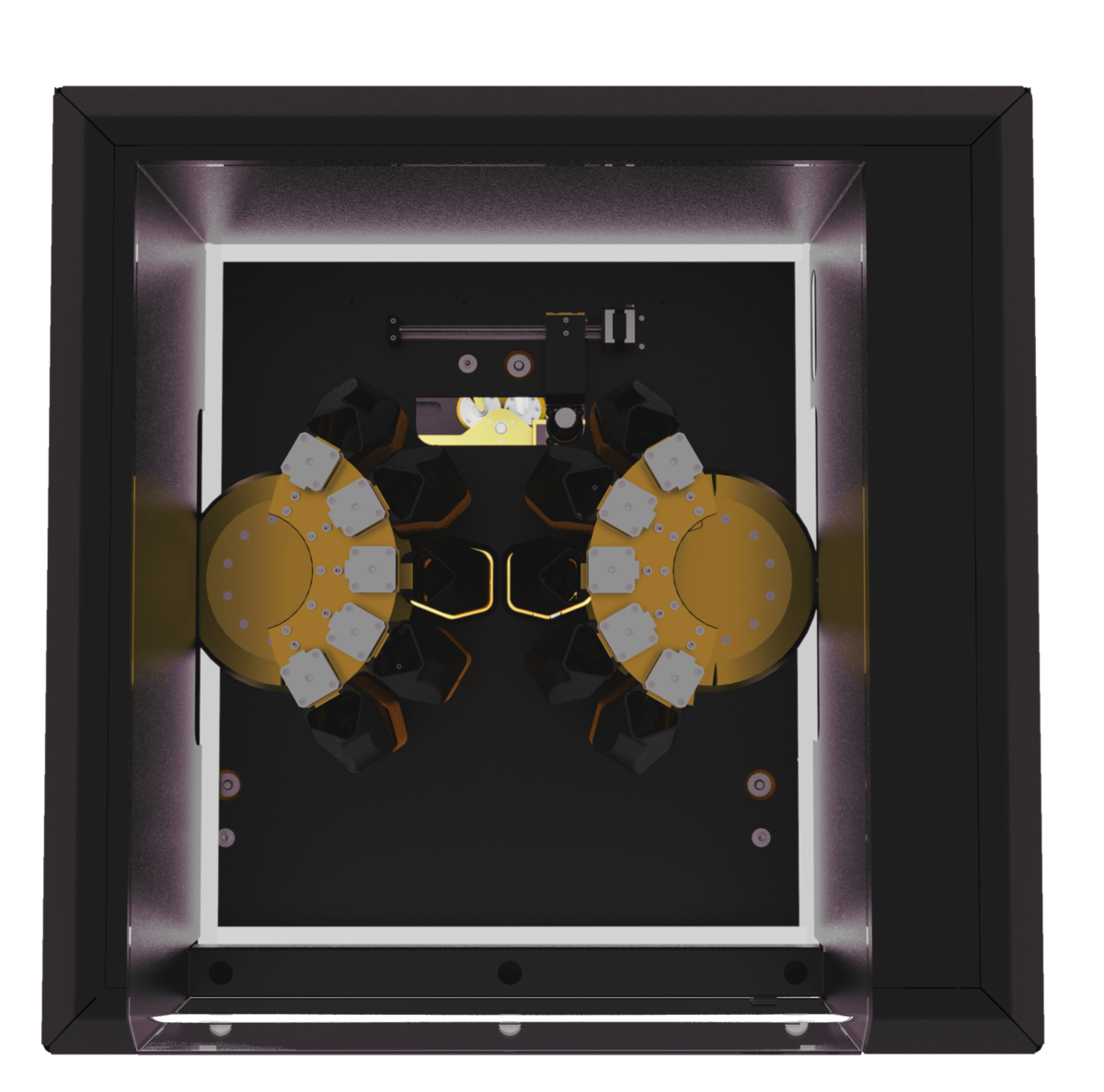
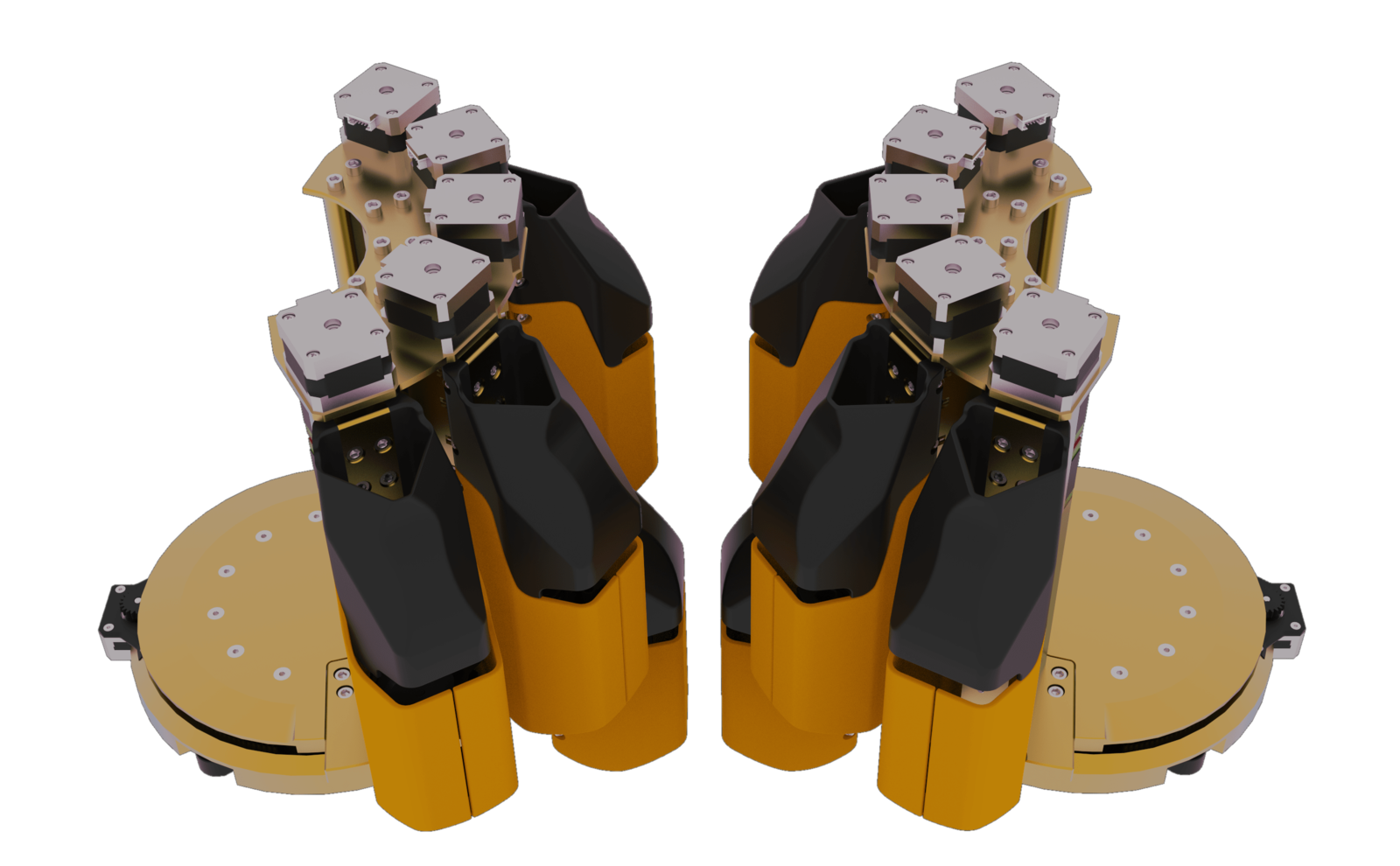
Two independent turret systems let you run multi-tool, multi-material workflows in a single build — without manual intervention or recalibration between steps.
Hybrid Fabrication
Combine MEW, DIW, MEX, and FDM in a single build job. Print a scaffold, deposit cells, and cure — all without removing the part. True multi-material capability, not just multi-nozzle.
Parallel Output
Run identical tools simultaneously across both turrets for 2× throughput, or sequence different tools for complex multi-step builds. Scale output without scaling floor space.
Seamless Tool Switching
Each turret swaps its active head on demand — mid-layer or between layers — without breaking the build sequence. Zero recalibration between tool changes.
One Platform. Infinite Configurations.
Swap tools, change materials, reconfigure workflows — without changing machines. BioLoom adapts to your process, not the other way around.
Melt Electrowriting (MEW)
Deposit sub-micron fibers with pinpoint accuracy. Create microstructured scaffolds that mimic native tissue architecture — enabling research that was previously impossible.
Direct Ink Writing (DIW)
Print hydrogels, bioinks, and soft materials with controlled extrusion. Layer living cells and biomaterials into constructs that maintain viability throughout fabrication.
Fused Filament Fabrication (FFF/FDM)
Fabricate thermoplastic and composite structural components. Build load-bearing frameworks that integrate seamlessly with softer biological layers.
Material Extrusion (MEX)
Process viscous pastes, ceramics, and composite slurries with precise flow control. Unlock material systems that conventional printers cannot handle.
Hybrid Multi-Technology Builds
Combine multiple fabrication methods in a single workflow. Print a PCL scaffold, deposit hydrogel layers, and cure — all without removing the part from the build plate.
Precision Printing in a Controlled Environment.
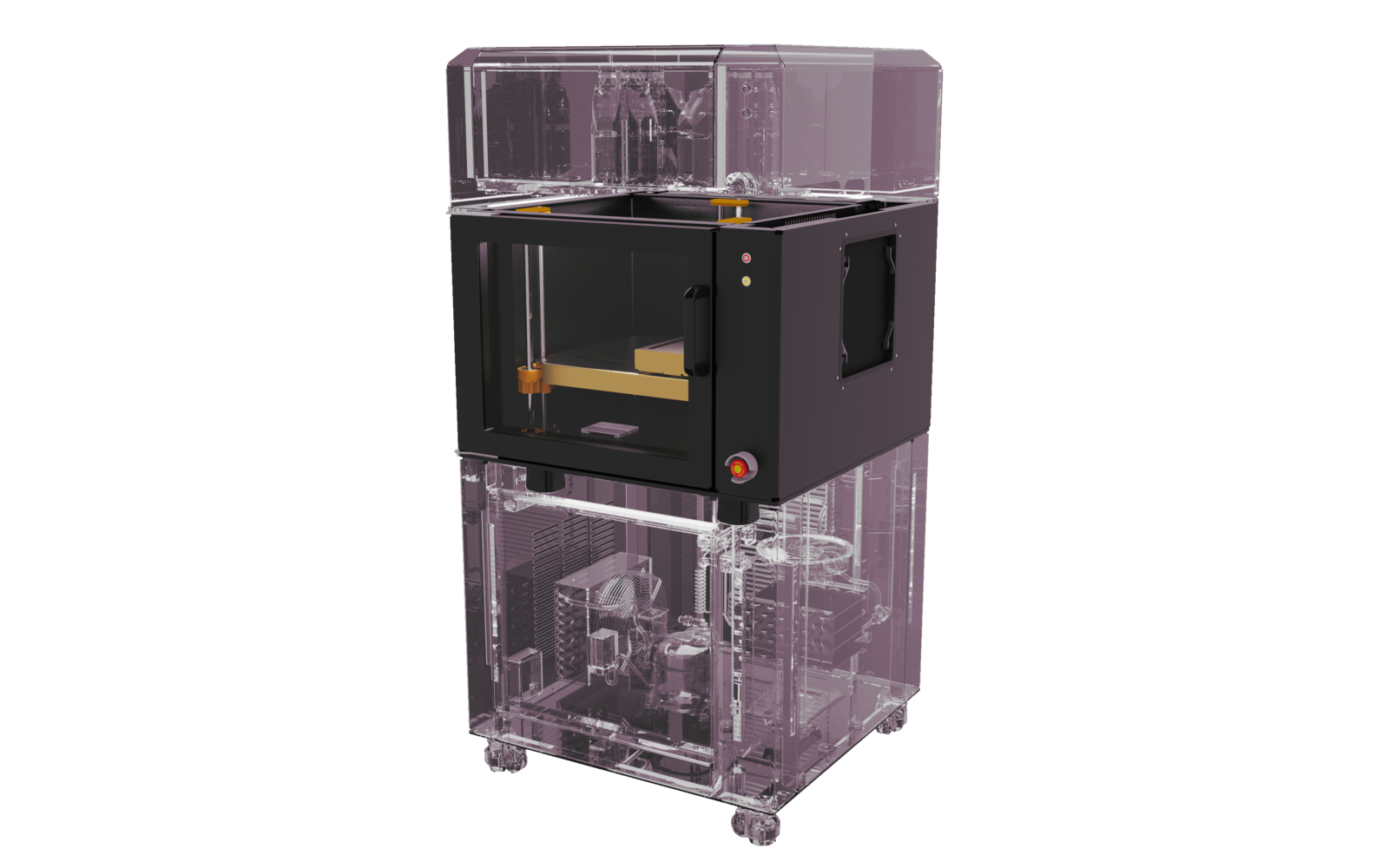
Temperature drifts and humidity spikes destroy repeatability. BioLoom's sealed chamber eliminates both — so your results depend on your protocol, not the weather.
Active Climate Control
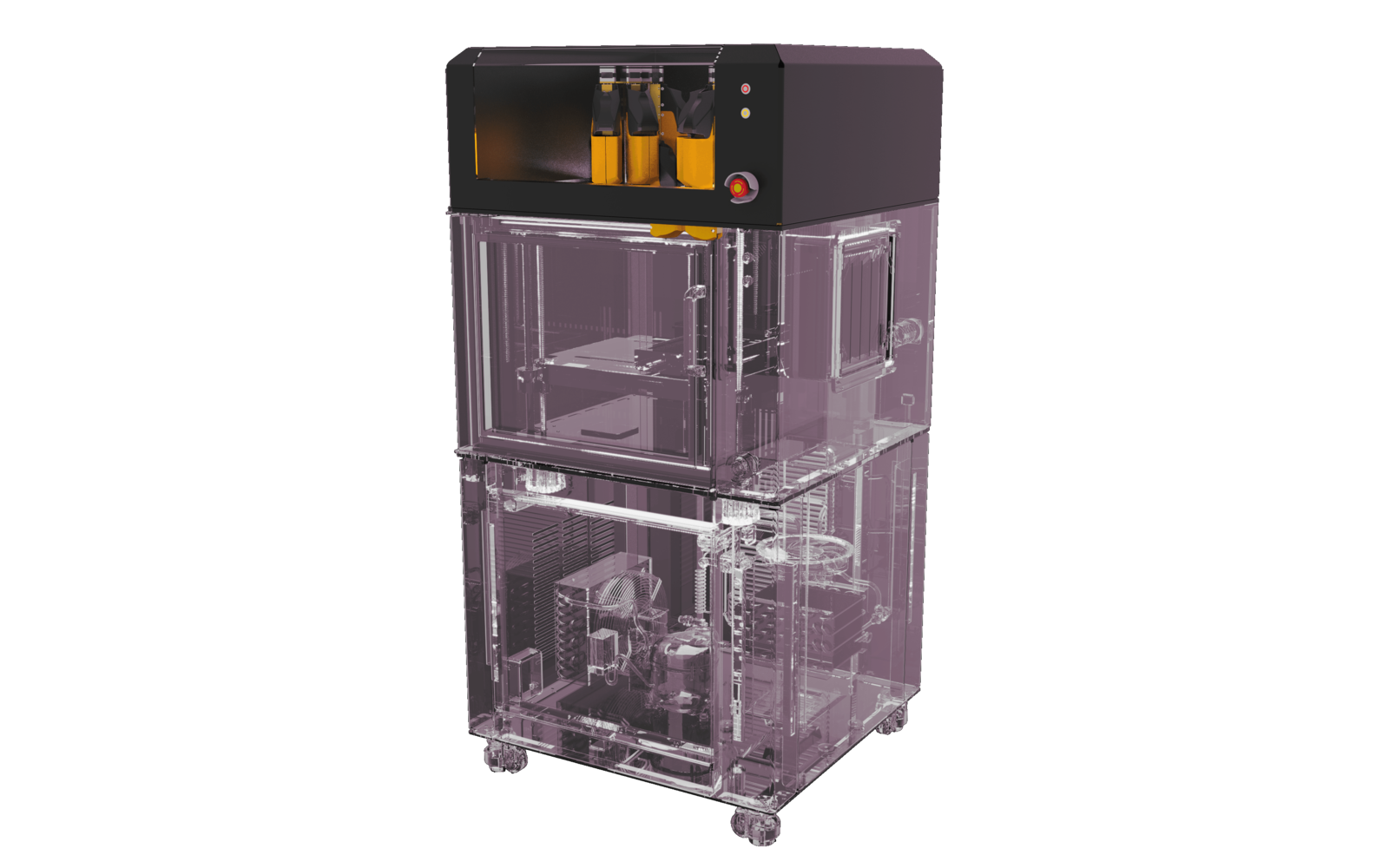
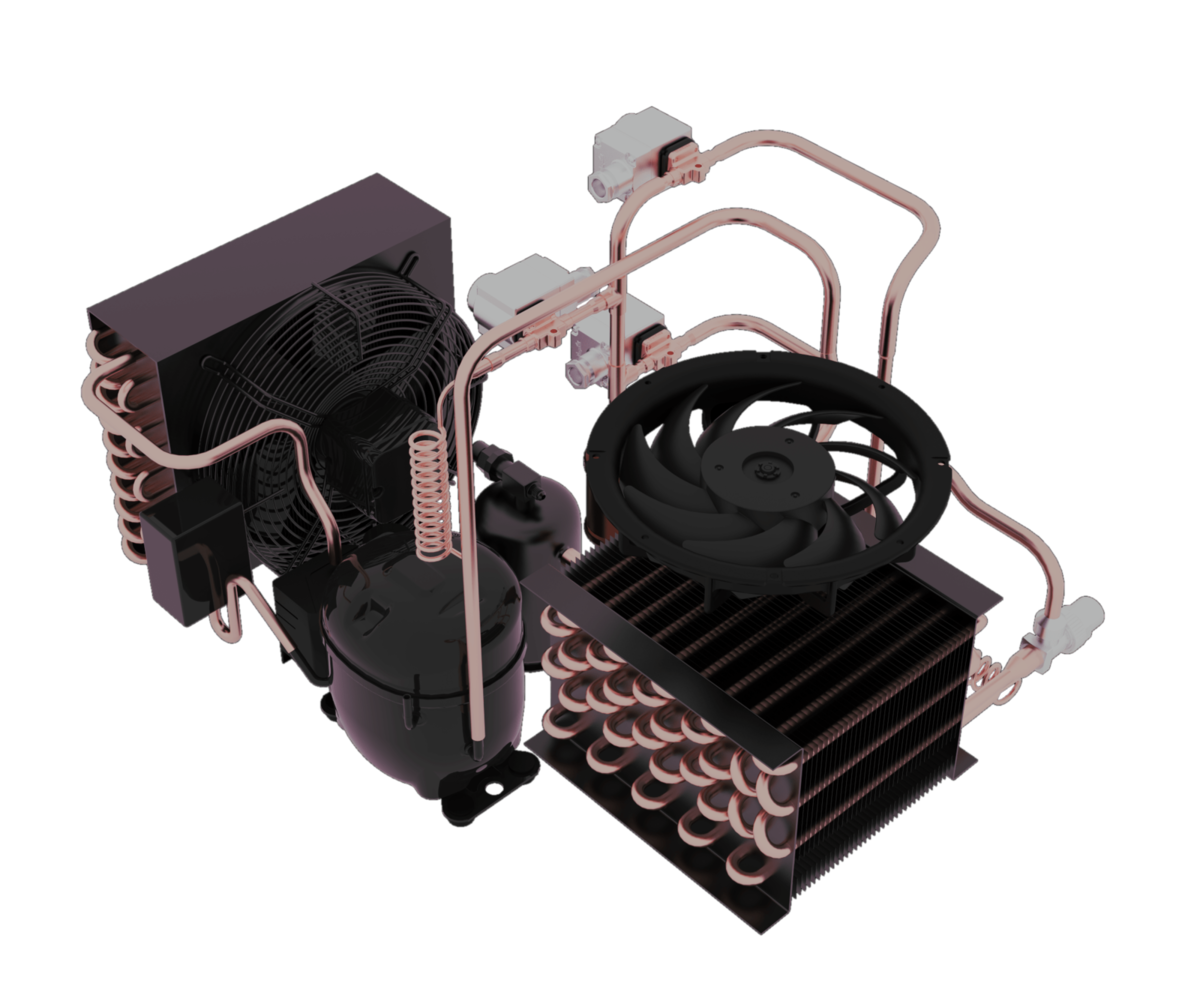
Sealed build chamber with active temperature control (10°C–50°C) and humidity regulation (30%–90%). Your materials experience identical conditions whether it's January or July.
Filtration & Sterilization
Integrated HEPA filtration and UV sterilization deliver cleanroom-grade air quality. Sealed glovebox enclosures prevent contamination — critical for cell-laden and pharmaceutical builds.
GMP-Compliant Design
Door interlocks, integrated sensors, and compliance-ready architecture. Move from research to regulated manufacturing without changing your hardware platform.
See Every Detail. Assure Every Build.
Built-in computer vision watches every layer as it forms. Defects are flagged in real-time — not discovered hours later when the build is already ruined. Every frame is logged for traceability and compliance documentation.
- Catch defects in real-time — before they ruin a multi-hour build
- Monitor layer quality continuously with automated anomaly detection
- Generate visual compliance records automatically for every fabrication run
From digital model to physical build.
Most bioprinters require manual G-code translation and file transfers. BioLoom executes directly from Loominus Studio — your digital design intent flows straight to the machine with zero translation layers.
Structured Toolpaths
Design your workflow visually in Loominus Studio. Toolpaths generate automatically from your structured process definition — no manual slicing or G-code editing.
Digital-Physical Layers
Every parameter, material assignment, and process decision carries forward from the digital model to the physical build. Nothing gets lost in translation.
Integrated Execution
BioLoom receives and executes the full workflow context — not just coordinates. The machine understands what it's building, not just where to move.
Human-Relevant Data at Scale.
Animal models fail to predict human drug response 90% of the time. BioLoom fabricates human-relevant tissue constructs at throughput levels that make screening practical — bridging the gap between in vitro and clinical reality.
Organoids & Tissue Arrays
Fabricate structured biological models with controlled architecture — vascularized, multi-layered, and reproducible across hundreds of samples.
High-Throughput Generation
Produce large sample sets formatted for standard labware. Run screening campaigns with biologically relevant constructs instead of flat cell monolayers.
Discovery to Validation
Connect fabrication directly to imaging, assay, and analysis workflows. Every construct is traceable from design to data point.
The Power Behind BioLoom.
Every subsystem is purpose-built for reliability and precision. Modular by design — so BioLoom evolves with your research, not against it.
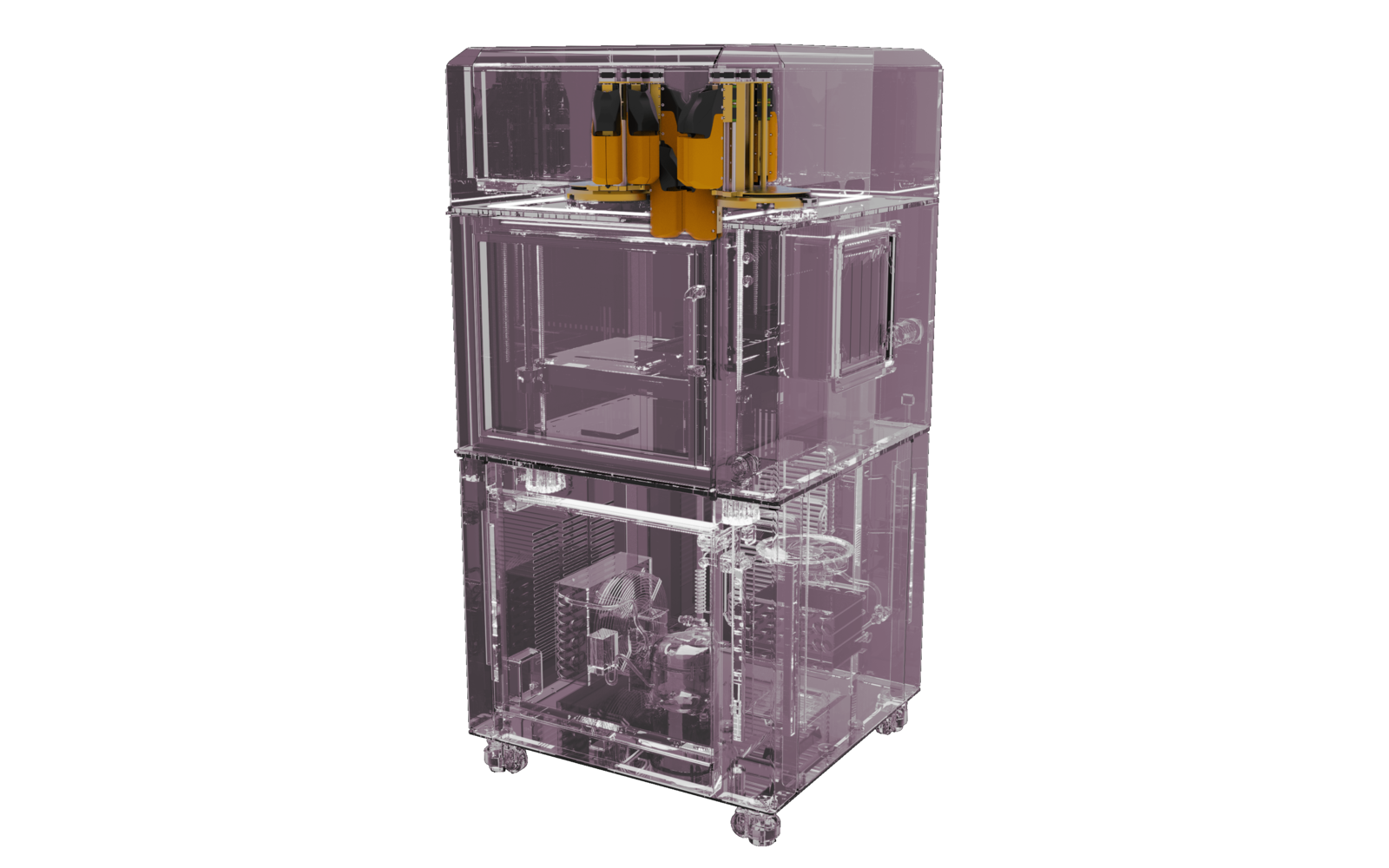
Light Processing Unit
The Light Processing Unit controls light delivery and exposure behavior as part of BioLoom's structured execution environment.
Controlled light delivery
Repeatable UV/visible exposure for photocrosslinking and curing — ensuring consistent material properties across every build
Process-linked exposure
Exposure timing and intensity stay synchronized with toolpath execution, eliminating manual coordination
Repeatable photoprocessing
Stable curing parameters from prototype to production, so your first scaffold matches your thousandth
Advanced Automation & Calibration Control.
Manual calibration wastes hours and introduces variability. BioLoom automates homing, leveling, and tool management — so every build starts from a known-good state, every time.
Automatic Homing
All axes and tools home automatically at startup. Walk away from manual positioning — BioLoom finds its reference points in seconds.
Z Calibration
Precision Z-height calibration runs automatically before every build. Your first layer lands exactly where it should, every time.
Bed Topography Mapping
Automated mesh leveling maps the entire bed surface and compensates for microscopic variations. Uniform deposition across every square millimeter.
Flatness Compensation
Automated flatness correction detects and corrects bed irregularities without manual shimming. One less variable between you and a perfect build.
Per-Tool Parameter Control
Flow rate, pressure, speed, temperature, Z-offsets, nozzle diameter, and high voltage — each tool gets independent control for maximum precision.
In-Process Tool Switching
Switch tools mid-build without recalibration. The Controller maintains alignment and offset data across all ten mounted tools automatically.
Why Choose BioLoom.
No other platform combines hybrid multi-material fabrication, environmental control, computer vision, and full digital-physical workflow integration in a single machine.
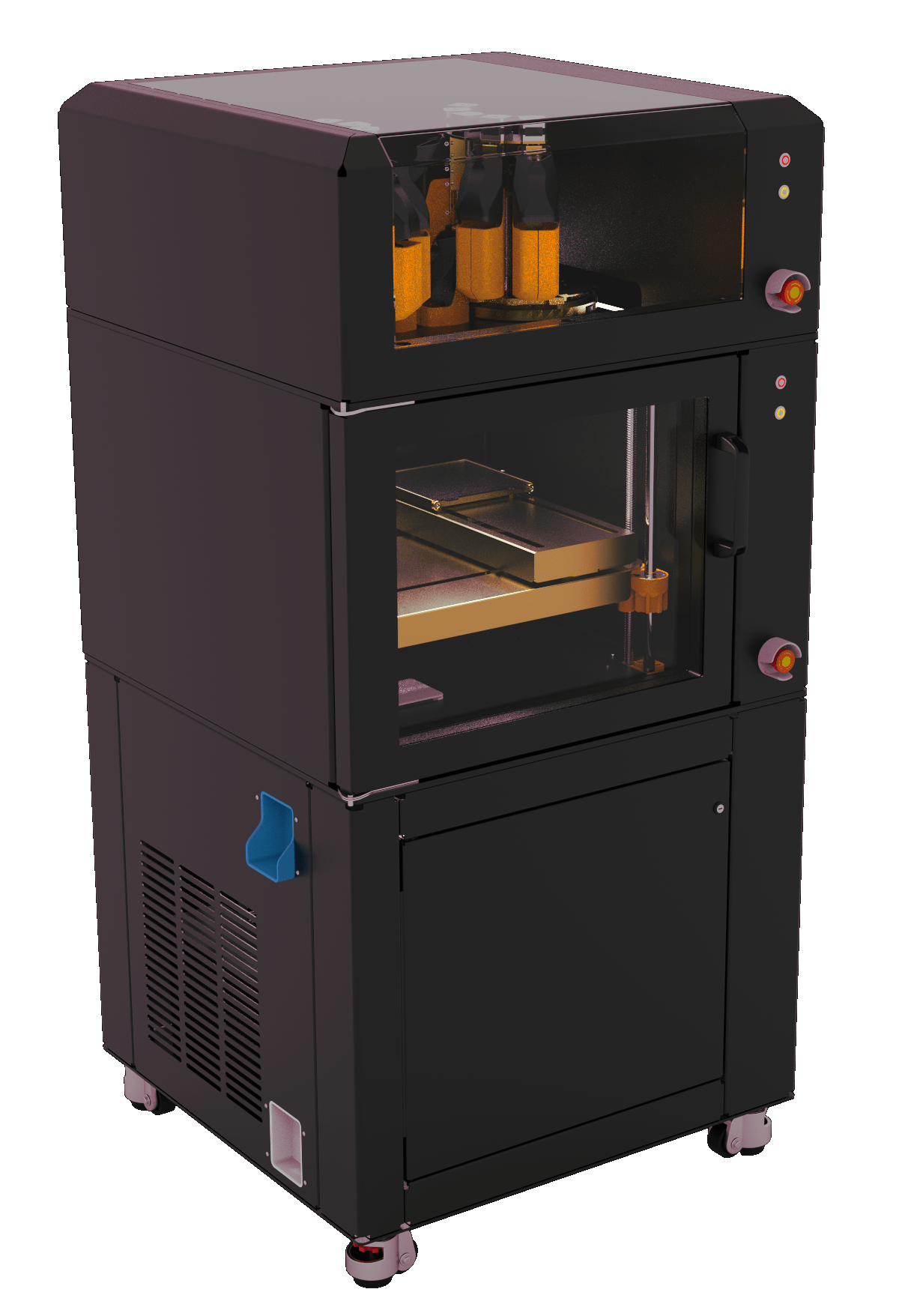
True Hybrid Printing
Run MEW, DIW, FDM, and MEX in a single build. No other platform combines this many fabrication modes with automatic tool switching.
IDEX Turret Architecture
Dual independent turrets with five tools each — ten total. Switch mid-build without recalibration for uninterrupted multi-material workflows.
GMP-Ready Environmental Control
Sealed chamber with HEPA filtration, active temperature and humidity control, and UV sterilization. Ready for regulated manufacturing from day one.
Computer Vision Monitoring
Real-time defect detection, layer-by-layer documentation, and process analytics. Every build is tracked, every anomaly is flagged.
Seamless Digital-Physical Integration
Execute directly from Loominus Studio workflows. No G-code translation, no file transfers — digital intent becomes physical output with zero friction.
Scaffolds Fabricated with BioLoom.
From sub-micron electrowritten fibers to centimeter-scale hybrid constructs — these are real outputs fabricated on BioLoom, not renders. Microfiber lattices, vascularized chips, and production-ready scaffolds.
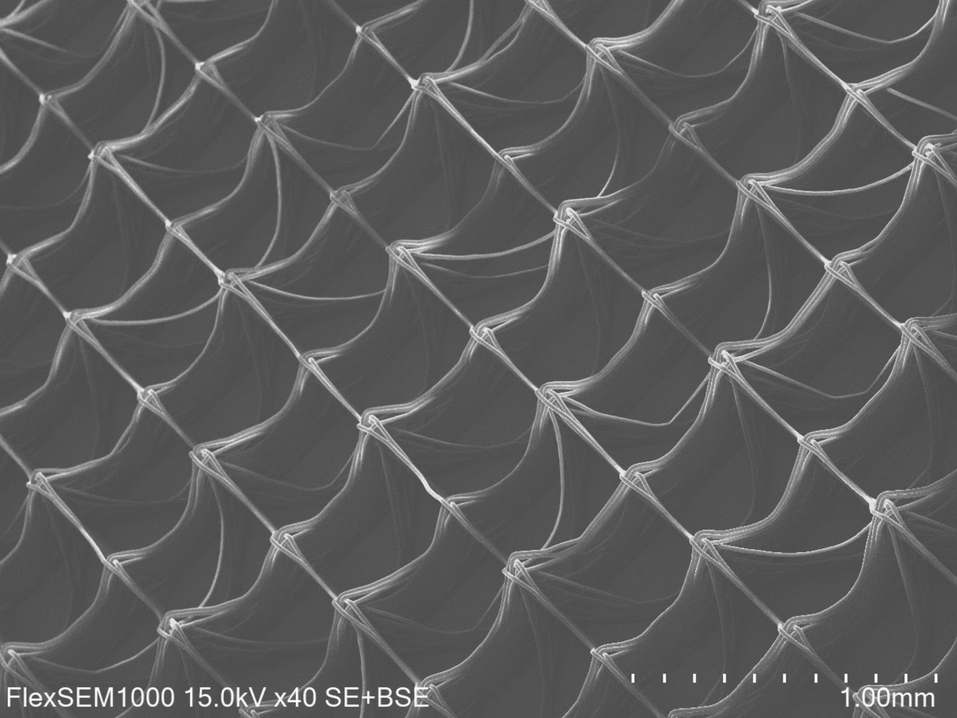
MEW Microfiber Lattice (×40)
Precisely deposited polymer fibers forming a regular grid architecture at microscale
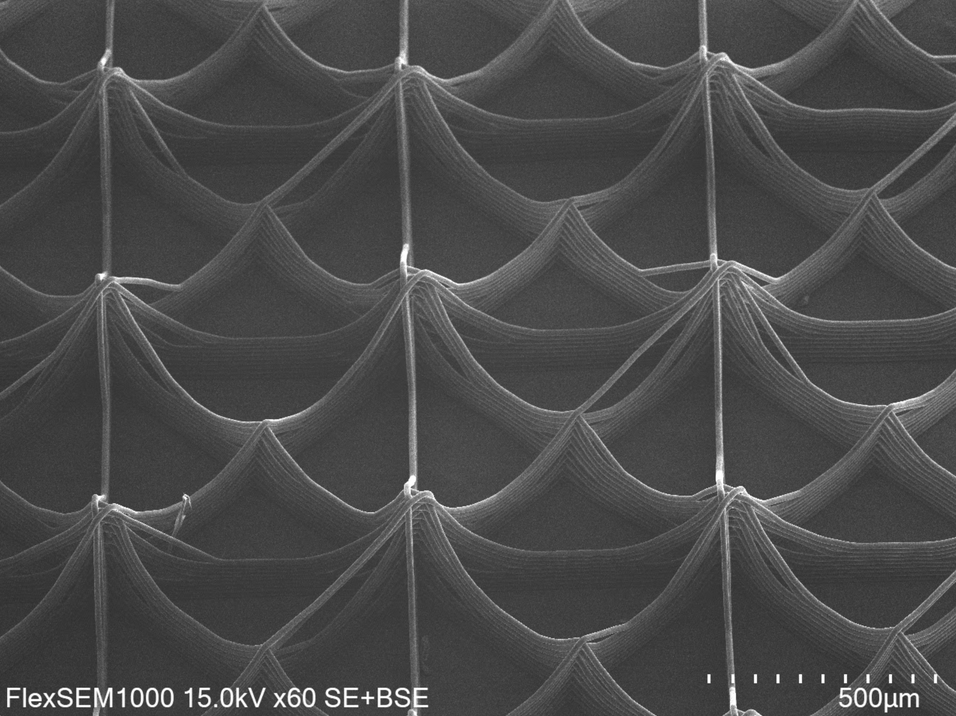
Fiber Architecture Detail (×60)
Higher magnification reveals uniform fiber diameter and controlled inter-fiber spacing
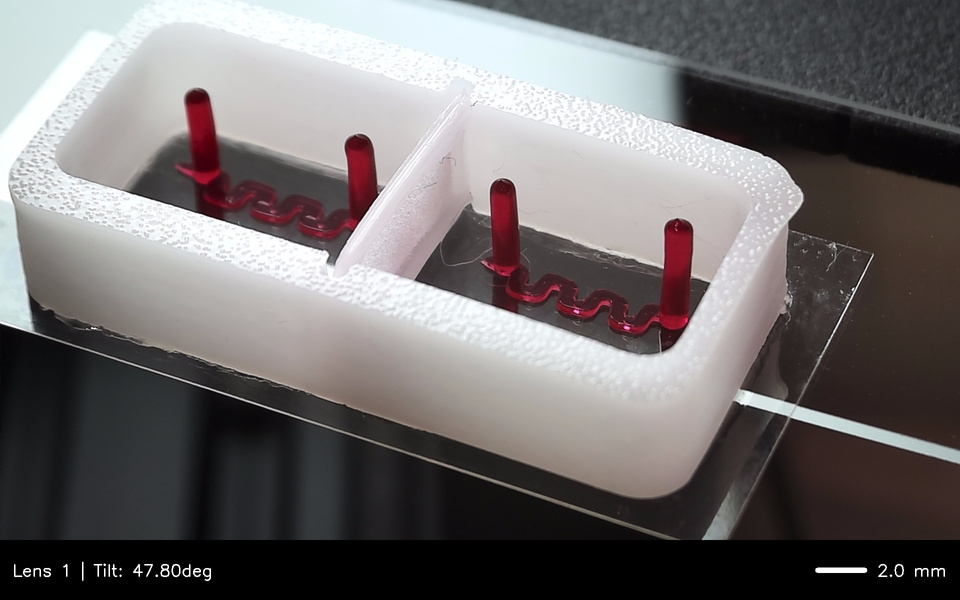
Multi-Material Microfluidic Construct
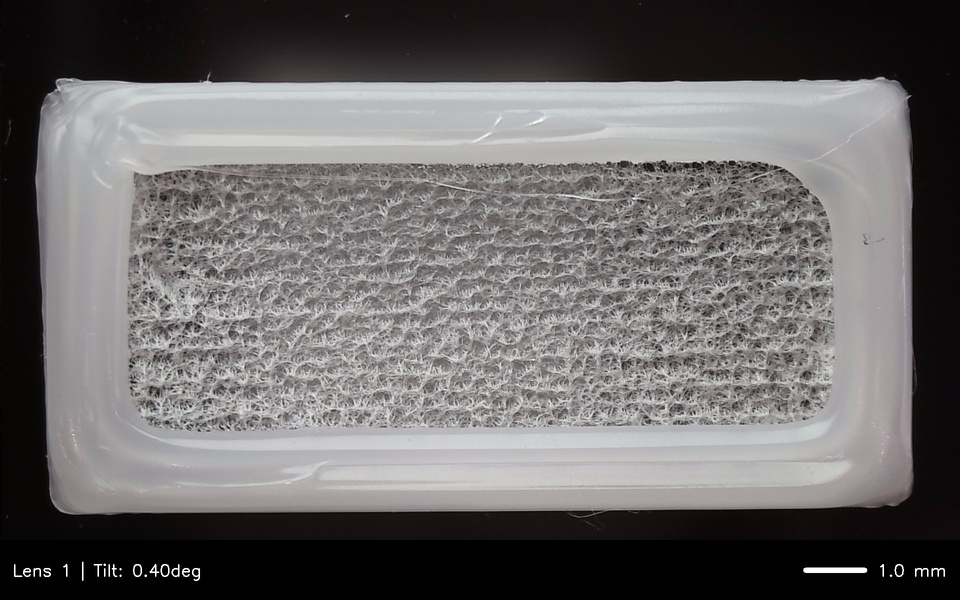
Hybrid scaffold combining structural framework with perfusable vascular-scale channels
Hybrid Scaffold in Well Plate
Production-ready construct formatted for standard labware and downstream assay workflows
Inside the BioLoom Chamber.
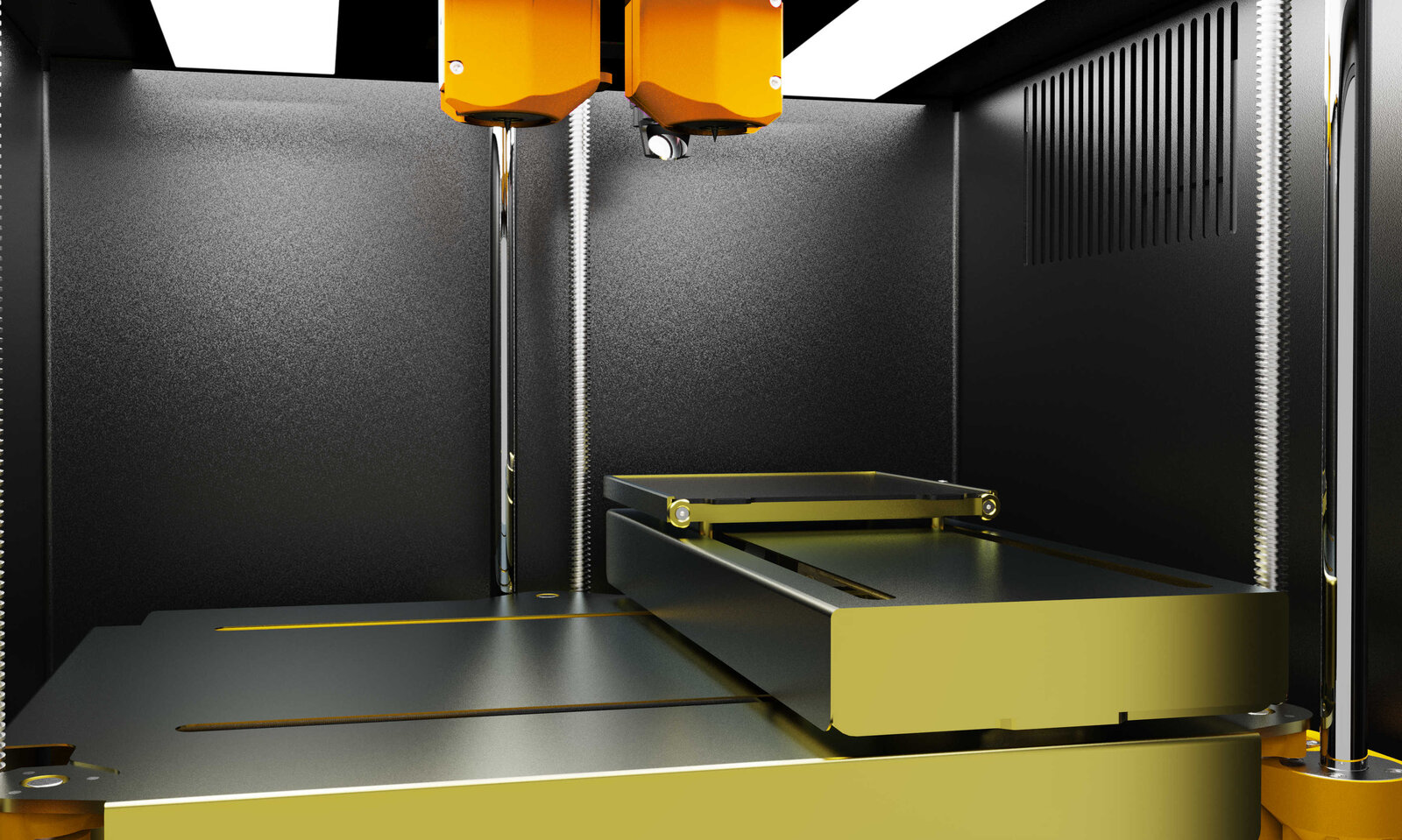
A sealed, climate-controlled workspace housing dual robotic turrets, integrated vision, and active environmental monitoring. Every component is positioned for accessibility and performance.
Dual Turret Overview
Internal Chamber View
Environmental Systems Layout
Built for Precision and Control.
| Build Volume | 300 mm × 290 mm × 260 mm |
| External Dimensions | 910 mm × 960 mm × 990 mm |
| Total Weight | 200 kg |
| Recommended Operating Conditions | 20–30°C / 30–60% humidity |
| Environmental Control Targets | Humidity 5–95%, temperature ±1°C from ambient |
| Printing Bed Temperature | Ambient to 100°C |
| Supported Fabrication Modes | MEW, FFF, DIW, MEX |
| Turret Architecture | Dual independent (IDEX), 5 tools per turret, 10 total |
| Air Filtration | HEPA-filtered, GMP-ready |
| Software Compatibility | Loominus Studio |
Acquire or Lease BioLoom.
Purchase BioLoom outright with an annual Loominus Pro subscription, or lease through Pro+ with installation, maintenance, and vesting ownership included. All hardware tiers include full Enterprise software access with 5-layer context engineering and procedural memory.
Enterprise BioLoom
Custom
per site or lab
Includes Enterprise software, Loominus Controller, dual-turret robotic control, GMP-ready chamber, and computer vision monitoring.
Frequently Asked Questions.
Continue Exploring.
Stay ahead of the curve
Updates on the BLI Tech Stack, system design, and applied research.
Topics of interest
No spam. Unsubscribe anytime. We respect your inbox.
Configure Your BioLoom Today.
Tailor BioLoom to your exact process requirements and unlock new capabilities as your needs evolve. Loominus Pro unlocks the full BioLoom workflow with CAD/CAM and Informatics integration, powered by 5-layer context engineering and procedural memory that compounds institutional knowledge.